

Oct 23, 2026
Black Pearl Granite: Polished vs. Leathered, What It Really Looks Like, and Dark Alternatives
By Kris Lamberth, Stone Specialist at USA Granite
Black Pearl is one of the first names people type when they want a black granite countertop, and it's easy to see why. It's a clean, dark stone that works in a lot of kitchens. But photos online can be misleading, so here's what Black Pearl granite really looks like, how the polished and leathered finishes differ, what to pair it with, and what to consider if you want something with more drama.
What Black Pearl granite looks like
Black Pearl is a natural granite with a deep black background and subtle mineral specks. Those specks give the surface depth and a little sparkle without overwhelming the room. It isn't a veined stone. If you picture bold white veins, that's a different look (we cover those below). Black Pearl is calm, dark and consistent.

A close-up of Black Pearl granite.
Because it's granite, it's durable and low maintenance, and it suits kitchen countertops, outdoor kitchens and bathroom vanities. Like most natural stone, granite is sealed from time to time, and we're happy to walk you through what that looks like.
Polished vs. leathered Black Pearl
Our Black Pearl slabs are double-sided: one face is polished and the other is leathered, so you pick which side faces up. See it on our Black Pearl page.
Polished is glossy. It reflects light, makes the black look deepest and shows the mineral flecks sparkle. It's a classic, formal look.
Leathered is soft and textured, with a matte, almost velvety feel. It's a more relaxed look, and a textured surface tends to show fingerprints and water spots less than a mirror-polished one.

Black Pearl Granite, polished side, in a styled kitchen.
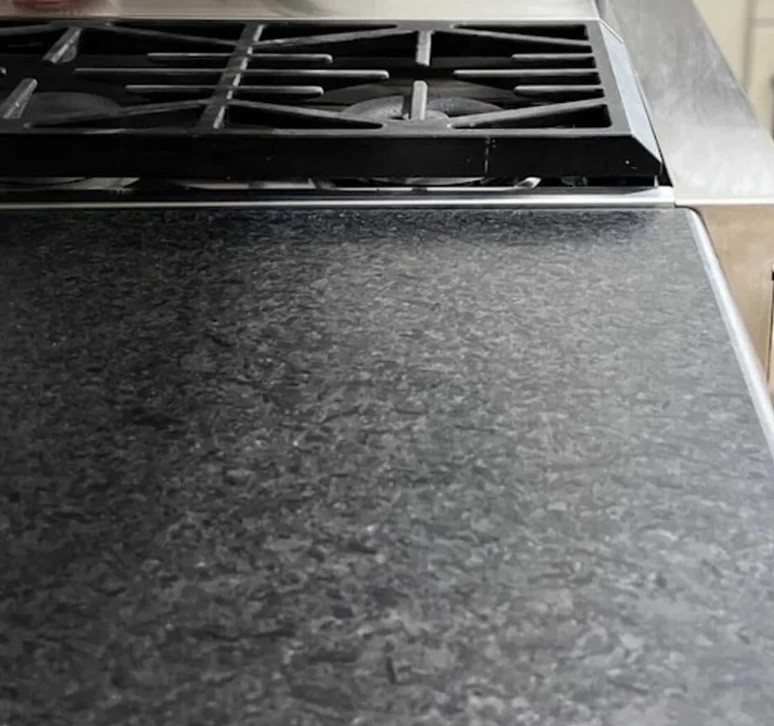
Black Pearl Granite, leathered side: matte, textured and darker charcoal, with the flecks showing as a soft silver-gray.
Neither is better. Polished is brighter and more dramatic, and leathered is quieter and more textural. If you can, look at both in person, because lighting changes how dark stone reads. For more on textured finishes, read our guide to leathered granite countertops.
What to pair with Black Pearl
A dark countertop is easiest to live with when the rest of the room has some contrast.
White or light cabinets make the black look crisp and modern.
Warm wood cabinets soften it and add a natural feel.
Navy or charcoal cabinets make a moody, tone-on-tone kitchen. Add brass or steel hardware to keep it from feeling flat.
A light backsplash keeps the room bright. A black backsplash gives a bolder, all-dark look.
Good lighting matters more with black. Under-cabinet lights and a few pendants keep a dark kitchen from feeling heavy. For more ideas, see black countertops for a kitchen island.
Dark alternatives if you want something different
Maybe you love black but want more movement, or you'd rather not seal your stone. These are all in stock at our Dallas slab yard through SlabSmart, and each is named by its real type.
Black Forest Granite: more drama, same family

Black Forest Granite in a styled kitchen.
Black Forest is also a natural granite, but with a deep black background and bold white veining. The movement is dramatic and works in modern and classic kitchens. Like Black Pearl, it comes with a polished side and a leathered side. Pick it if Black Pearl feels too plain.
Calacatta Black Quartz: white with black veins

A Calacatta Black waterfall island we fabricated in Carrollton. See the project.
This one flips the script: Calacatta Black is an engineered quartz with deep black veins on a light surface. It's a striking centerpiece, and because it's quartz, it's non-porous and doesn't need sealing. Good if you want black accents without a fully black counter.
Nero Marquina Quartz: sharp white veins on black

Nero Marquina Quartz in a styled kitchen.
Nero Marquina is a quartz with a deep black body and sharp white veining, a sleek, modern look inspired by black marble. It suits a bold kitchen or bathroom. Quartz makes it an easy-care choice. Not sure how quartz compares with natural stone? Read quartz vs. granite.
Seeing dark stone in Dallas–Fort Worth
Black is hard to judge on a screen. Come see the slabs in person, in daylight and under shop lights, and bring a cabinet door or a paint chip if you have one. Lighting changes how polished black reads, so it's worth checking it at different times of day.
Frequently asked questions
Is Black Pearl granite really black? It reads as deep black with subtle mineral specks. Up close you'll see lighter flecks, and the look changes a little with lighting and finish.
What's the difference between polished and leathered Black Pearl? Polished is glossy and shows the most depth. Leathered is matte and textured, with a softer, more relaxed look.
Does Black Pearl granite need to be sealed? Natural granite is typically sealed periodically. We can tell you what to expect when you pick your slab.
Is Black Pearl granite in stock? Yes, it's one of our SlabSmart stones in Dallas, sold by the square foot.
What if I want black without sealing? Look at Nero Marquina Quartz or Calacatta Black Quartz. Both are engineered quartz, which doesn't need sealing.
How much does a Black Pearl countertop cost? It depends on the size of your kitchen, the finish, the edge and the cutouts. The free in-home estimate is the fastest way to get a real number.
See Black Pearl in person
Visit our slab yard at 2407 N Walton Walker Blvd in Dallas, or call (214) 927-2571. We measure, fabricate and install across Dallas–Fort Worth.
Prefer we come to you? Book a free in-home estimate.