

Oct 5, 2026
Quartzite vs. Quartz: Which Countertop Is Right for Your DFW Kitchen?
They sound almost the same, they can look almost the same, and they sit right next to each other in our showroom. But quartzite and quartz are very different materials, and choosing the wrong one for how you actually use your kitchen is one of the most common regrets we hear.
Here's the straight comparison, from the people who cut and install both every week in Dallas–Fort Worth.
The short answer
Quartzite is a natural stone, quarried from the earth. Every slab is one of a kind. It's very hard and handles heat well, but it needs sealing.
Quartz is engineered, made from crushed natural quartz bound with resin. It's consistent, non-porous and close to maintenance-free, but it doesn't like direct heat.
If you want a one-of-a-kind natural look and don't mind sealing once a year or so, go quartzite. If you want a busy-family kitchen that never needs a second thought, go quartz.
Side-by-side comparison
Quartzite | Quartz | |
|---|---|---|
What it is | Natural stone (sandstone transformed by heat and pressure) | Engineered: about 90% ground quartz plus resin and pigment |
Look | Every slab is unique, with natural depth and movement | Consistent pattern, so what you see in the sample is what you get |
Heat | Very heat resistant | Resin can scorch or discolor. Always use a trivet |
Scratches | Very hard, resists scratching | Hard, but not as hard as quartzite |
Stains | Porous, so it needs periodic sealing | Non-porous, so it never needs sealing |
Outdoor use | Good choice (UV stable) | Not recommended. UV can yellow the resin |
Cost | $$–$$$$ | $$ |
Look and feel
This is where most people start, and honestly it's where the two get closest.
Natural quartzite has a depth you can't fully fake. Hold a slab of Taj Mahal Quartzite up to the light and you'll see layers, translucency and veining that changes from one end of the slab to the other. That's also why we always recommend coming in to pick your exact slab.
Quartz has come a long way, though. Our Taj Mahal Quartz captures the same creamy, soft-veined look, and many homeowners can't tell the difference across the room. Its pattern is consistent, which makes seams and large islands easier to plan.
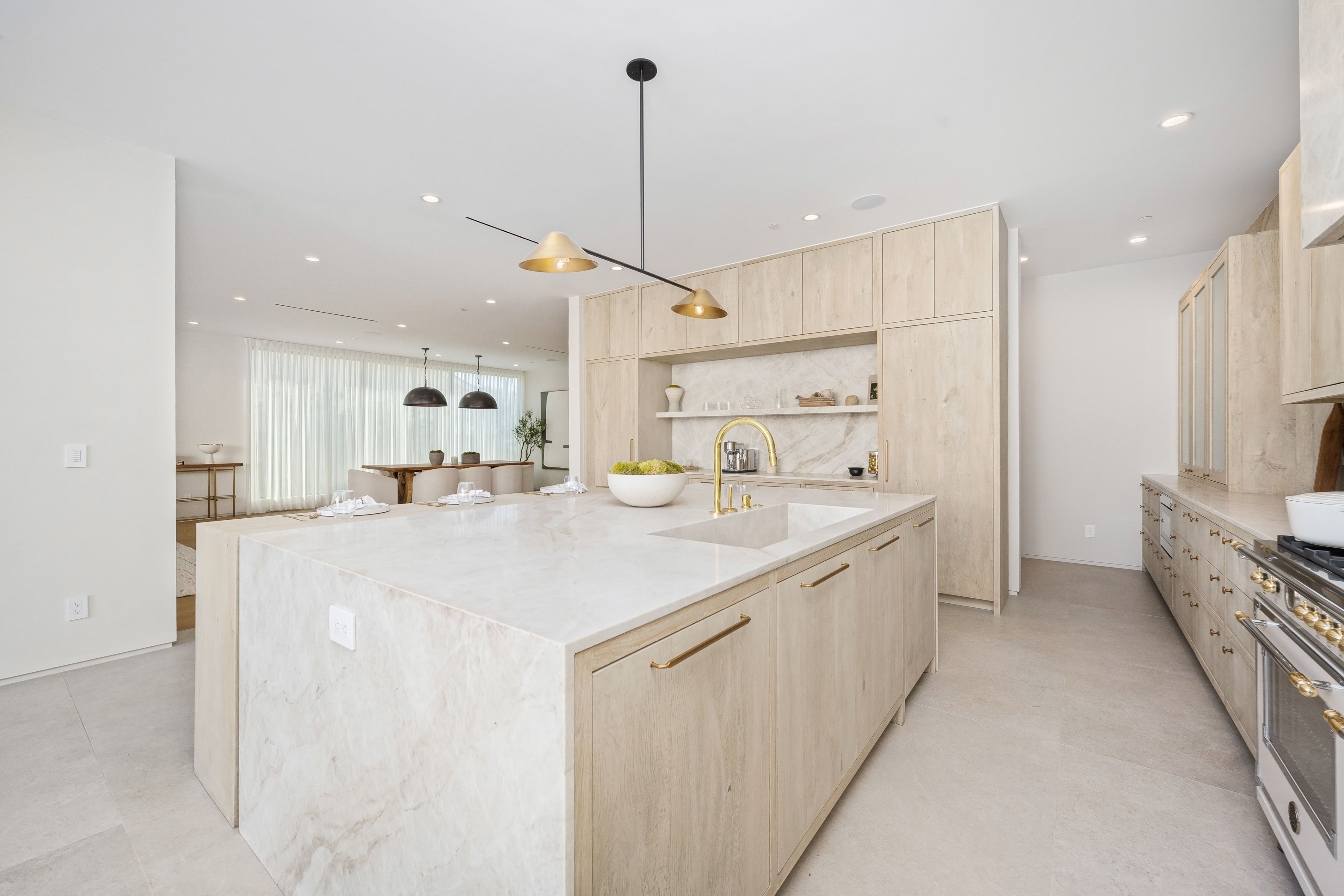
Natural Taj Mahal quartzite in a DFW kitchen.
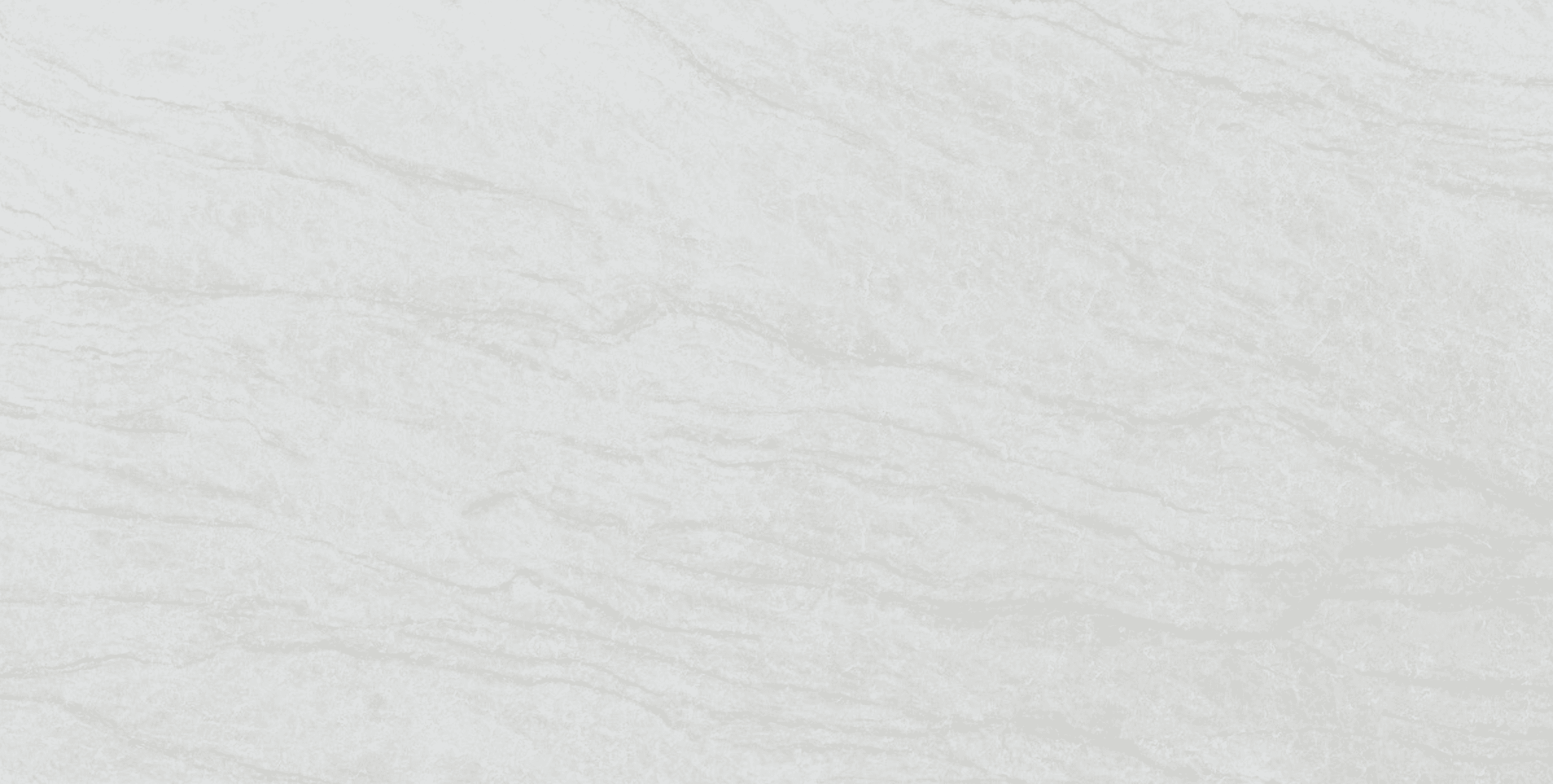
Taj Mahal quartz, the engineered look-alike. It's in SlabSmart.
Durability and everyday use
Heat: Quartzite wins. You can set a warm pan down without worrying (we still recommend trivets, because thermal shock is real). With quartz, the resin binder can scorch or yellow under a hot pot.
Scratches: Quartzite is one of the hardest countertop materials out there. Quartz is very tough too, but it's slightly easier to mark.
Stains: Quartz wins. It's non-porous, so wine, coffee and turmeric wipe right off. Quartzite needs to be sealed, usually once a year depending on the stone and how you cook, and spills shouldn't sit overnight.
Outdoor kitchens: Quartzite, or granite. Texas sun is hard on quartz resin over time.
Cost: quartzite vs. quartz in Dallas–Fort Worth
In general, quartz sits in the mid-range and quartzite runs from mid-range to premium, depending on the stone. Rare quartzites like Cristallo sit at the top of the market.
For context, most DFW kitchens land between $4,000 and $9,000 for new countertops, and material is only part of that. Layout, edges, cutouts and removal all play a role. We break it all down in our 2026 DFW countertop cost guide.
A tip that saves a lot of people money: our SlabSmart program lets you pay by the square foot instead of buying a full slab, and it includes natural quartzites as well as quartz. That's often the most cost-effective way to get the real-stone look.
Quartzites to see
Available through SlabSmart (in stock, pay by the square foot):
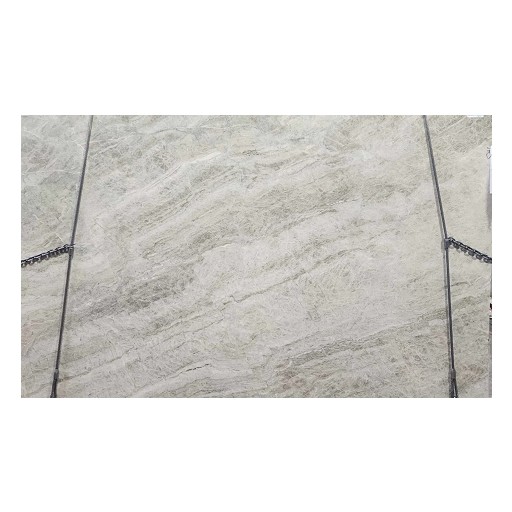
Madre Perla Quartzite: warm beige and cream with pearly movement. It's very close to Taj Mahal, with a slightly richer glow.
Bianco Superiore Leathered Quartzite: soft white to pale gray with delicate smoky veining, in a soft leathered finish. New to SlabSmart.
Yosemite Leathered Quartzite: bright white with crisp, pencil-thin charcoal lines. Clean and modern. New to SlabSmart.
Ocean Blue Quartzite: bold swirls of deep blue, silver and white, for a statement island.
Full slabs we source and fabricate (hand-pick yours at a partner slab yard):

Taj Mahal Quartzite: the classic. A soft cream background with gold and gray veining.
Cristallo Quartzite: a translucent white stone that can even be backlit.
Perla Venato Quartzite: a sandy, warm neutral with gentle veining.
Quartz to see
All of these are in our SlabSmart program:

Taj Mahal Quartz: the Taj look without sealing.
Calacatta Gold Quartz: a crisp white background with soft gray and gold veining. One of our most popular.
Macavella Quartz: soft white with long, flowing taupe veins. It has the look of Macaubas quartzite without the sealing.
Organic White Quartz: a clean, natural white that works with almost anything.
And where does granite fit?
Granite is the third option people weigh up. It's natural, very durable and heat resistant, and usually more speckled than veined. If you're comparing all three, our Quartz vs. Granite guide covers that side of it.
Which one should you choose?
Choose quartzite if:
You want a truly one-of-a-kind natural slab
You cook hot and fast and want heat resistance
You're doing an outdoor kitchen
You don't mind sealing about once a year
Choose quartz if:
You have kids, pets, or a lot of red wine
You want zero maintenance
You want a consistent pattern for a large island or tricky seams
You want the marble or quartzite look at a mid-range price
Frequently asked questions
Is quartzite more expensive than quartz? Usually, yes. Quartz typically sits in the mid-range, and quartzite runs from mid-range to premium depending on the stone. SlabSmart quartzites like Madre Perla, Bianco Superiore and Yosemite narrow that gap because you only pay for the square footage you use.
Does quartzite need to be sealed? Yes. Most quartzites should be sealed about once a year, more often for lighter or more porous stones. We'll tell you exactly what your slab needs at install.
Can you put hot pans on quartz? We don't recommend it. Quartz contains resin that can scorch or discolor with direct heat. Always use a trivet.
Which is better for a kitchen, quartzite or quartz? Both are excellent kitchen countertops. Quartzite is better for heat and for a natural, one-of-a-kind look. Quartz is better if you want low maintenance and stain resistance.
Is Taj Mahal quartz the same as Taj Mahal quartzite? No. Taj Mahal quartzite is a natural stone, and Taj Mahal quartz is an engineered surface designed to look like it. They look very similar but behave differently. Quartz needs no sealing, and quartzite handles heat better.
See them side by side in Dallas
Photos only go so far, especially with quartzite, where the slab you choose matters. Come by our slab yard at 2407 N Walton Walker Blvd and we'll put quartzite and quartz next to each other, or book a free in-home estimate and we'll bring samples to you.
We fabricate and install throughout Dallas–Fort Worth, including Plano, Frisco, McKinney, Fort Worth, Arlington and the surrounding area.